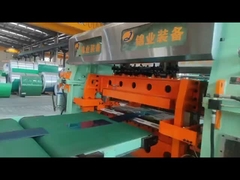
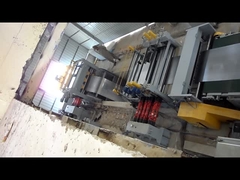
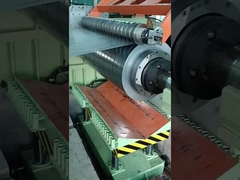
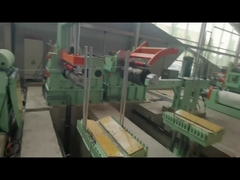
Tension Leveler 2Hi 4Hi Skin Pass Rolling Mill Line for Steel Coil Stainless Steel Coil

cold mill
August 11, 2024
Category Connection: Cold Rolling Mill
Brief: Discover the advanced Tension Leveler Skin Pass 2Hi 4Hi Rolling Mill Line designed for steel and stainless steel coils. This high-performance system enhances flatness and material properties through stretch bending and multi-roll straightening, ensuring superior quality and efficiency in your production process.
Related Product Features:
  • Achieves excellent flatness by eliminating wave edges and camber bends through stretch bending and multi-roll straightening.
  • Reduces tension requirements to 1/3-1/5 of pure stretch straightening, optimizing energy efficiency.
  • Improves material anisotropy, enhancing deep drawing performance and reducing waste rates.
  • Supports both 2Hi and 4Hi rolling mill configurations for versatile skin pass applications.
  • Processes materials with yield strength ≤ 350 MPa and tensile strength ≤ 450 MPa.
  • Handles coil specifications up to 2100 mm outer diameter and 20t weight.
  • Operates at speeds up to 500 m/min with a max rolling force of 6000 KN.
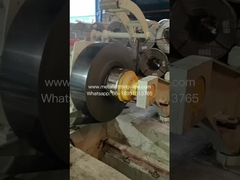
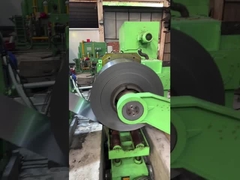
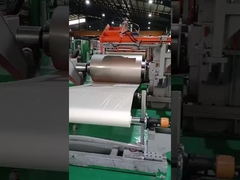
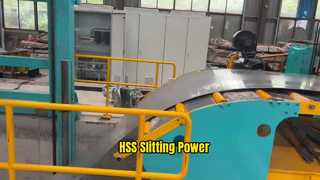
  • Includes comprehensive components like uncoiling, tension S-rolls, skin pass mill, and recoiling systems.
Faqs:
  • What materials can the Tension Leveler Skin Pass Rolling Mill Line process?
    The mill line processes plain carbon steel and stainless steel coils with yield strength ≤ 350 MPa and tensile strength ≤ 450 MPa, suitable for thicknesses of 0.2-2.0 mm and widths up to 1000 mm.
  • How does the tension leveler improve flatness and material properties?
    The tension leveler uses stretch bending and multi-roll straightening to eliminate wave edges and camber bends, enhancing flatness. It also reduces material anisotropy, improving deep drawing performance and reducing waste rates.
  • What are the key components of the rolling mill line?
    The line includes uncoiling and recoiling sections, tension S-rolls, a 2Hi or 4Hi skin pass mill, entry and exit shears, and auxiliary systems like hydraulic rollers, AGC systems, and electric controls for seamless operation.